

Augmented Glasses, Tech and Disability
Everything is advancing but will disabled people pay the cost?

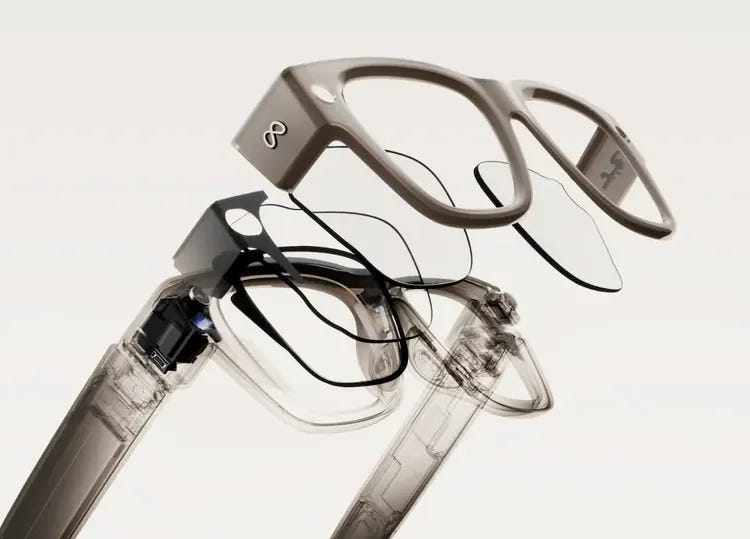
Last year, I got to have a play with some AR glasses while in London. A few weeks my friend Paul (also a VIP) got himself some Meta Rayban glasses ans now TikTok (BlindTok?) is rippling with collective realisation that a company actually made something VIPs like myself might actually be able to use and benefit from.
Excellent, yes! Expensive, also yes… Gen 3 coming soon? Great!
So I took myself off to a big, brand-name UK optician to take a literal look for myself. And, yes. I was very impressed, the lovely chap assisting me is totally sold and I can see why… Glasses are one of the most common forms of humans trying to adapt to a physical disability.
And, if you’re not me (I’m decent with close things, terrible at distance…), I can totally see the use amongst the VIPs of the internet. Reading menus, telling you how far someone or something is away from you, recording POV video, capturing pictures in an instant… Hell, in doing research for this, I found an article where Meta promised to give every blind veteran in the US a pair. That is a rare kind of philanthropy, you don’t see this very often, because the disabled are usually the last people to be remembered in things like this.
Fantastic move! Excellent timing, too, with the 250th anniversary celebration coming up.
As a tech journalist, I can see the use cases, I can see the demographics of people, regular and like me, who will find new and interesting ways to use the glasses. I’d love to get some hands-on time myself but, right now, the price is a tad high, not prohibitive but still a bar.
But something else worries me… At what point will the government start to penalise people who adopt this tech? As an example, in the UK, we have Personal Independence Payments (PIP), given to disabled people to help mitigate the many unseen costs of having a disability. It comes in daily living component and a mobility component, each with a standard and an enhanced rate. The most you can get is £778.40 every four weeks (£10,119 per year).
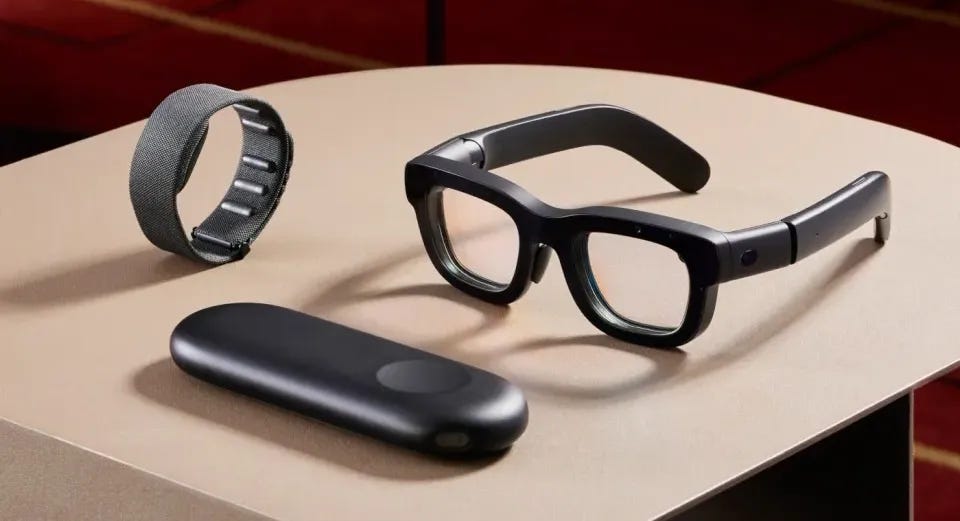
It is not related or tied to employment. It is not means-tested. For many it is a vital source of freedom, of choice, to live life and not just survive it.
PIP is VERY hard to get, especially on the highest rates in both categories. No one hands it to you, you have to fight for it. And then periodically prove yourself because PIP expires… And you have to start your claim from the beginning again.
It sounds like a lot of money. But when you factor in the stress, the time, the trauma, it’s not enough.
Seriously, while the amount goes up every April, it doesn’t scale with inflation. Estimates usually cite the average cost of disability at over a thousand pounds a month, depending on the disability. Being blind, I have a lot less equipment to buy, but cooking is a nightmare. For someone in a wheelchair, it’s a heck of a lot more expensive. I have one friend who is only just surviving, and its heartbreaking to see a good person being punished for their own body going ‘no’.
My issue is that at what point will the Powers That Be decide that someone’s innate disability is mitigated enough by technology? I can hear the assessors now:
“So you’re blind, but you have the 7th Gen AI Real Time Eye Glasses from Big Tech Company? Even with two prosthetics, I don’t see why you’re here… So it can read for you, tell you what’s in front of you in real time. Well it doesn’t sound like you’re blind, not any more. Claim denied!”
And this, it’s horrifying. Because technology can help, but I’ve never met a system (even as I live and breathe accessibility and the Apple ecosysatem), it never completely takes away your disability. And then, your very identity, not by your own metrics, of course, but. by someone else’s and that someone is not disabled…
I know it sounds extreme but the non-disabled do seem to think they can fix us. Because that’s all we want, to be fixed… Except, no it’s really not. I’ve been visually impaired my entire life, it’s as much a part of me as the one eye I have remaining. There’s no fix for my disability, or for many others. But if you read the news there’s always some big discovery, which the non-infirmed thinks must be a one-size-fits-all kind of thing when the truth is about as far from that as we’re ever going to get.
I want to love technology that helps folks like me, even if its expensive and how I use AI smart glasses would never be the same as my friend Paul yses his. I also hope that soon, with a third gen on the way and the promise of something similar from Apple (my prefered purveyer of all things tech…) in the next six to twelve months. But the world will always see this kind of tech as a univeral fix and that is never, ever going to happen.
I hope that my fears are just that but I’ve seen enough accessible tech to know that it is always going to involve some kind of bar, some kind of premium and a narrowed focus which means some people will get a lot out of such tech, while others might not.
Because accessible tech, it’s more often than not made for us and not by us, to someone else’s idea of what accessible tech should be and how it should work. And there will always be those, who are not visually impaired or disabled, who think they know more than we, the people who live day to day, with incredibly specific, incredibly diverse conditions.
I really hope I’m wrong, but then time will tell…